How Does Invisalign Work?
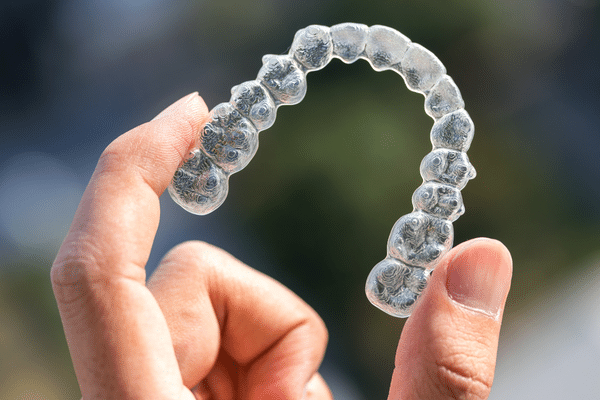
Do you want a straighter smile but aren’t looking forward to wearing metal brackets and wires on your teeth? The good news is that there is an alternative: Invisalign is a great way to straighten your smile without the discomfort of traditional braces. Talk to an orthodontics expert to ask: how does Invisalign work? You will learn that this treatment can be as effective as metal braces while offering much more comfort during your treatment time.
Invisalign is effective for treating common orthodontic concerns, including crowded teeth, gapped teeth, and/or mild overbites.
Invisalign: How Does It Work?
Modern technology is used to create a personalized set of clear aligners. We use 3D computer imaging to scan your teeth with an iTero scanner, as well as digital x-rays to get a clear idea about your current dental alignment and issues that need to be corrected. During this consultation, you have the opportunity to ask any questions that come to mind, such as how does Invisalign work? It’s important that you understand how Invisalign works so that you know what to expect in the coming months and that you will maintain consistency with the treatment plan.
After a thorough review of your current alignment and long-term goals, then we create custom-made aligners (also known as Invisalign trays). It takes a few weeks to create the aligners.
How exactly does Invisalign work? The aligners are created in a series, and each set must be worn in a specific order. You will wear the set of Invisalign aligners for 1 ‘ 2 weeks, depending on the recommendations from your dentist. The goal is to move the teeth in small increments, so you will see the teeth slowly coming into alignment over the weeks and months.
When you move to the next set of aligners in the series, it is the perfect placement to continue the gentle movement and realignment. Your teeth will shift position a little bit week by week until you finish the series of aligners and reach the desired alignment.
How Long Does It Take for Invisalign to Work?
How fast does Invisalign work? Most Invisalign treatment schedules last between 12 ‘ 18 months, with between 20 ‘ 50 sets of aligners during this time. But the overall treatment time varies depending on each patient’s unique needs and the severity of the dental misalignments that need to be corrected.
During this treatment time, the dentist will send you home with several sets of aligners at a time. You will need to visit our office for a check-up every few weeks so we can monitor your progress. These regular checkups help us identify potential issues in the earliest stages. Then, we can make adjustments to the treatment plan as needed, helping to complete the treatment plan as soon as possible.
Is It OK to Not Wear Invisalign for a Day?
No, you should not skip a day. It’s important that you wear your aligners as much as possible.
Keep in mind that this treatment is most effective when you are diligent about wearing the Invisalign trays throughout the day. The recommendation is that these aligners be worn at least 22 hours per day.
When you wear your aligners consistently, it helps move the teeth into the final position for each tray set. If you reduce the amount of time you are wearing the trays, then it means that your teeth won’t be in the anticipated position for the next set of aligners. These small differences add up over time, resulting in a situation where your progress is noticeably off in the future weeks and months.
When you ask the dentist how long does it take for Invisalign to move teeth, remember that the recommended treatment time depends on your diligence in wearing the aligners throughout the day.
Do you sleep with Invisalign? Yes! Since you need to wear the aligners for a minimum of 22 hours per day, it’s important that you keep the trays in your mouth while sleeping.
Most people only remove the trays at meal times. Then, make sure to brush your teeth and replace the trays as soon as possible after the meal is over. Also, make sure to remove the aligners twice a day when you need to brush your teeth, floss, and clean the aligners.
How to Get Invisalign
Keep in mind that many patients are good candidates for Invisalign. But there are certain situations where it might be better to use traditional braces instead. If you want to learn how Invisalign works and would like a consultation for this treatment, then schedule a consultation with our team to discuss your options.
We will assess the severity of your dental misalignments and discuss the specific issues you would like to fix. Invisalign is an excellent option for mild or moderate cases. Severe problems often need more advanced orthodontic procedures to achieve the desired results.
Getting started is easy: simply pick up the phone and call our office to schedule your consultation. We will schedule a time for you to meet with the dentist, giving you a personalized experience to choose the ideal treatment for your unique needs.
How Does Invisalign Work? Invisalign Fits Your Lifestyle!
It’s easy to see why many patients prefer Invisalign over traditional braces. These clear aligners are discreet and easy to wear and allow flexibility during the treatment time. With metal braces, there is ongoing discomfort because of the way the brackets and wires affect your lips and cheeks. Also, certain foods must be avoided to minimize damage to the wires and brackets.
On the other hand, Invisalign aligners can be removed so you can enjoy your favorite dishes. Plus, the trays are practically invisible when wearing them, which is why this treatment is called INVISalign.
Schedule a Consultation to Learn How Invisalign Works
Are you ready to learn more? Then contact our office to book a consultation and ask: how does Invisalign work? Our team at myDental is always just a phone call away, offering full-service dental treatments for the whole family. We have several locations for your convenience. Call when you are ready for more information about these services.
Frequently Asked Questions
Invisalign uses a series of custom-made clear plastic aligners that apply gentle, controlled pressure to shift teeth gradually over time. Each set of aligners is slightly different, moving teeth a fraction of a millimeter with each new tray. The aligners are typically changed every one to two weeks as teeth progress toward their final position.
Invisalign aligners should be worn 20 to 22 hours per day for the best results. They are only removed for eating, drinking anything other than water, and brushing or flossing. Wearing them fewer hours than recommended can slow down treatment and may extend the overall timeline significantly.
Invisalign treatment generally costs between $3,000 and $7,000, depending on the case complexity and treatment duration. Many dental insurance plans with orthodontic benefits cover a portion of the cost, similar to coverage for traditional braces. Payment plans and flexible spending accounts can help make the remaining cost more manageable.
The process begins with a consultation and a 3D digital scan of the teeth, which is used to create a personalized treatment plan. The dentist maps out exactly how the teeth will move at each stage. Custom aligners are then manufactured and provided in sets, with check-up visits scheduled every six to eight weeks to monitor progress.
Most Invisalign treatments take 12 to 18 months, though simpler cases can be completed in as little as 6 months. After active treatment, a retainer must be worn to keep teeth in their new positions. Schedule a consultation to get a personalized timeline based on the specific alignment corrections needed.
 English
 Spanish